NASA INDOOR SOCCER
Adult Coed League — Official Rules & Code of Conduct
Effective October 2026
1. General Rules & Eligibility
NASA Indoor Soccer is committed to providing a competitive, safe, and respectful environment for all participants. Players are expected to demonstrate good sportsmanship, follow referee instructions, and respect fellow players, staff, and spectators.
Players must be at least 15 years old. Participants under 18 require parent or guardian authorization.
All players must register and complete the required liability waiver before participating.
Teams may register a maximum of 10 players. Guest players must register and receive approval before playing.
Playing under another participant’s identity is prohibited.
2. Game Format & Coed Requirements
Games are 6v6, including five field players and one goalkeeper.
Games consist of two 20-minute halves with an approximately two-minute halftime.
The clock runs continuously unless stopped by the referee for injury, misconduct, or safety.
A minimum of four eligible players, including a goalkeeper, is required to begin or continue a game.
Teams unable to meet the minimum player requirement within five minutes of kickoff forfeit 3–0.
Unlimited substitutions are permitted from designated areas. Players must exit before substitutes enter.
There is no offside rule.
All goals count as one point, regardless of the scorer.
Coed Participation Requirement
Teams must have a minimum of two female players on the field at all times to play with a full six-player lineup.
Teams with fewer than two female players on the field must play with a maximum of five players (5v6) until two eligible female players are available.
This restriction applies whether a team has zero or one female player available.
The goalkeeper counts toward the female-player requirement.
Teams may not substitute an additional player to circumvent this restriction.
Teams must comply with the requirement throughout the match, including during substitutions.
Yellow- and red-card penalties apply in addition to the coed lineup restriction. A team already limited to five players must play with four while serving a one-minute yellow-card penalty, or for the remainder of the match following a red-card ejection, provided the team maintains the minimum player requirement.
If a team falls below four eligible players due to an ejection or another permanent player shortage, it forfeits the match.
3. Equipment Requirements
Shin guards are mandatory for all players and must be properly covered by socks.
Indoor soccer shoes or approved athletic shoes are required. Cleats are strictly prohibited.
Teams must wear coordinated shirt colors or facility-provided bibs. Goalkeepers must wear a distinguishable color.
Jewelry or equipment presenting a safety hazard must be removed or secured.
Players without appropriate equipment will not be permitted to participate.
4. Physical Contact & Defensive Play
Controlled physical contact is permitted as part of normal soccer play. All challenges must be reasonable, controlled, and directed toward legally contesting possession.
Prohibited contact includes:
Pushing, shoving, holding, grabbing, or deliberate body-checking.
Tripping, kicking, striking, or attempting to strike opponents.
Using elbows, forearms, or excessive body pressure.
Reckless tackles, dangerous challenges, or unnecessary contact after play stops.
Deliberately targeting or intimidating opponents based on size, strength, gender, or ability.
Players must exercise appropriate control regardless of physical differences between opponents. A challenge may be penalized as dangerous even when injury was not intended.
5. Slide Tackling, Corners & Wall Safety
Slide Tackling
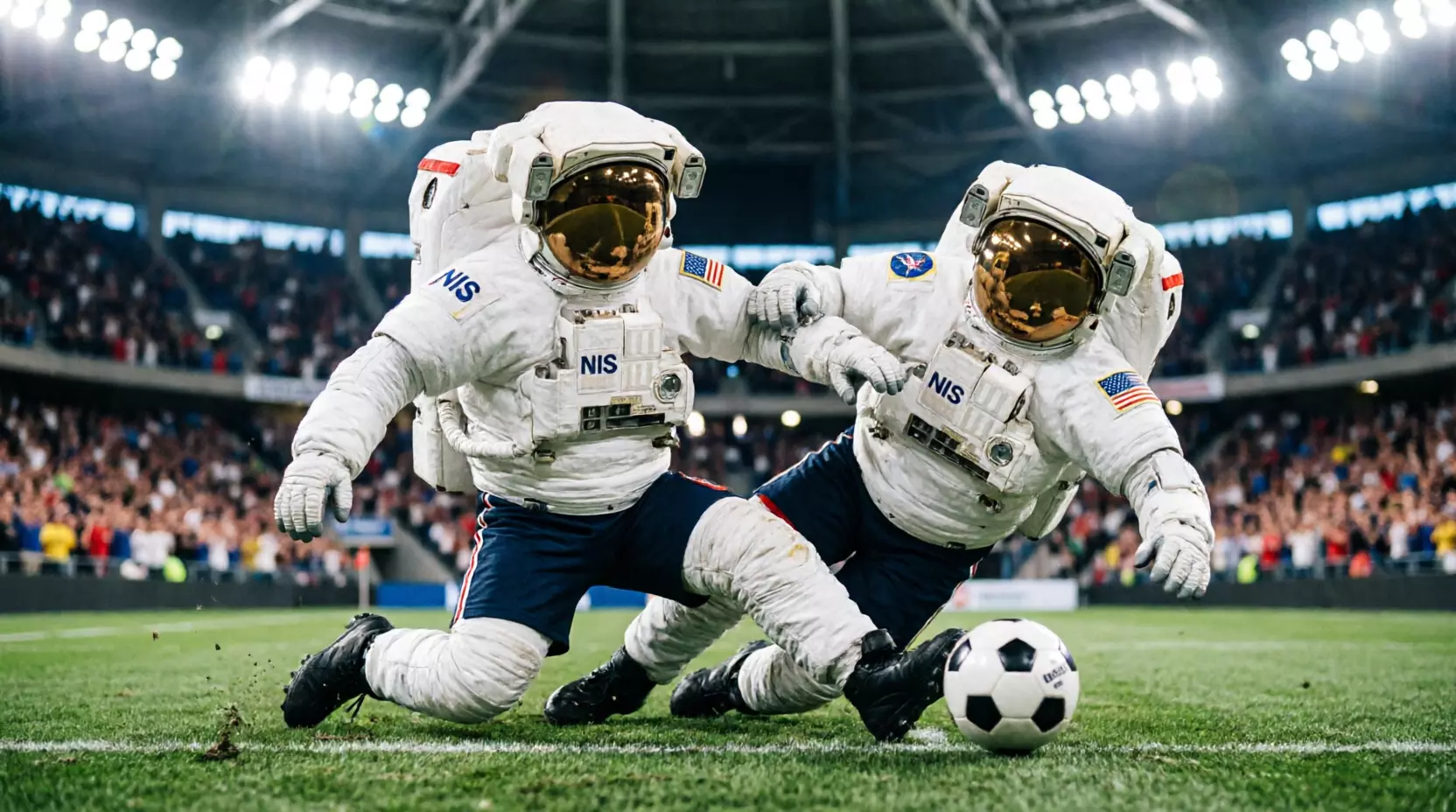
Slide tackling is prohibited for all field players.
Players may not slide toward opponents when attempting to win possession.
Sliding without an opponent nearby may be permitted if the referee determines it is safe.
Goalkeepers may dive or slide within their designated area to collect or save the ball, provided they do not recklessly endanger opponents.
Corner Protection Rule — One Defender Only
To reduce aggressive play and dangerous contact in confined areas:
When an attacking player possesses the ball in a field corner, only one opposing defender may actively challenge that player at a time.
A second defender may position nearby but may not simultaneously pressure, trap, tackle, or physically challenge the player in possession while the player remains in the corner.
Defenders may not use their bodies to pin an opponent against the walls or block all reasonable paths of movement.
Once the ball or player in possession moves out of the corner area, normal defending resumes.
A violation results in an indirect free kick to the team in possession. Reckless contact may result in additional disciplinary action.
The referee determines when the corner-protection rule applies based on the field layout and position of play.
Wall Safety
Deliberately pushing or charging an opponent into perimeter siding is prohibited and may result in an immediate red card.
Deliberately pinning the ball against a wall to waste time is prohibited.
6. Fouls & Free Kicks
Direct free kicks are awarded for physical fouls such as illegal pushing, holding, tripping, kicking, charging, and handball offenses.
Indirect free kicks are awarded for technical violations, dangerous play without contact, obstruction without contact, and specified out-of-play situations.
Additional rules:
The ball remains in play when rebounding off approved perimeter walls.
A ball traveling over a side wall or striking overhead structures results in an indirect free kick for the opposing team.
If the ball leaves play behind the goal, the restart is a goalkeeper distribution or corner kick, depending on the last touch.
Free kicks near walls may be moved approximately three feet inward.
Opponents must remain at least three yards from the ball during free kicks.
Players must restart within five seconds once the ball is ready.
Direct-free-kick fouls committed by defenders inside their penalty area result in a penalty kick.
Referees may allow advantage on qualifying fouls except when the fifth-team-foul rule requires an immediate stoppage.
Referees retain authority over restart placement and enforcement.
7. Five-Team-Foul Rule
To discourage repeated fouling and excessive physical contact, NASA Indoor Soccer enforces a five-team-foul penalty system.
Team Foul Accumulation
Each team accumulates qualifying fouls throughout the entire match, including both halves. The count does not reset at halftime.
Every five accumulated team fouls results in a penalty kick awarded to the opposing team.
The player responsible for the fifth foul automatically receives a yellow card and must serve the standard one-minute penalty.
After the fifth foul, the team’s foul count resets to zero and a new five-foul cycle begins.
This process repeats throughout the match, with penalties awarded on the 5th, 10th, 15th, 20th, and every subsequent fifth qualifying foul.
The team-foul penalty kick replaces the normal free-kick restart. If the fifth foul already warrants a penalty kick, only one penalty kick is awarded.
If the player responsible for the fifth foul already has a yellow card, the additional yellow results in a red card.
Fouls count toward the team total even when the referee would otherwise apply advantage.
When a team’s fifth qualifying foul occurs, the referee must stop play and award the penalty kick and automatic yellow card. Advantage does not apply to the fifth foul.
Referees are responsible for tracking and enforcing team-foul totals and communicating when a team is approaching its fifth foul.
Qualifying Team Fouls
The following count toward the team total:
Pushing, holding, charging, tripping, or kicking.
Reckless or illegal physical challenges.
Illegal slide tackles.
Handball offenses.
Other direct-free-kick offenses.
Technical violations without physical contact, routine out-of-play restarts, and misconduct unrelated to a qualifying foul do not count toward the five-foul total.
Disciplinary Interaction
Team fouls accumulate independently of individual yellow and red cards.
The automatic yellow card issued for a fifth team foul carries the standard one-minute penalty.
If the yellow card results in a second yellow and subsequent red card, the player is ejected and the team remains short-handed for the remainder of the match.
Any short-handed penalty is applied in addition to the coed lineup restriction.
The referee may issue additional disciplinary sanctions for reckless, dangerous, or violent conduct independently of the team-foul count.
8. Goalkeepers
Goalkeepers may handle the ball only within their designated goalkeeper area.
Opponents may not charge, push, or recklessly collide with a goalkeeper.
Players may not kick or dislodge a ball secured in the goalkeeper’s hands.
Goalkeepers must avoid reckless or dangerous challenges.
Goalkeeper substitutions require the referee’s acknowledgment.
9. Yellow & Red Cards
Yellow Card — One-Minute Penalty
A yellow-carded player must immediately leave the field for one minute.
The team plays short-handed; substitutions are not permitted for the penalized player.
The penalty does not end early if the opposing team scores.
The player may return only with referee authorization.
Yellow cards may be issued for reckless fouls, repeated violations, dissent, delaying play, unsportsmanlike conduct, or committing a team’s fifth accumulated foul.
Red Card — Immediate Ejection
The player is immediately removed and may not return or be substituted for the remainder of the match.
The team must continue short-handed, provided the minimum number of players remains.
A $25 fine must be paid immediately following the official end of the game.
Failure to pay results in ineligibility for future league participation until payment is received.
Additional suspensions are determined by management according to the severity of the incident. There is no automatic future-game suspension.
Two yellow cards in the same match result in a red card and the associated fine.
10. Aggression, Fighting & Misconduct
NASA Indoor Soccer maintains a zero-tolerance policy for violence, fighting, and threatening behavior.
Prohibited conduct includes:
Punching, striking, kicking, grabbing, or aggressively shoving another person.
Threatening, intimidating, or aggressively confronting players, referees, or staff.
Deliberately attempting to injure an opponent.
Spitting at another person or intentionally directing a ball at someone in anger.
Physical retaliation following a foul or disagreement.
Continuing an altercation after being instructed to disengage.
Aggressive conduct may result in immediate ejection, suspension, or permanent facility exclusion. Being provoked does not justify retaliation.
11. Harassment & Unsportsmanlike Conduct
All players must respect the dignity and personal boundaries of others.
The following are prohibited:
Sexual harassment, inappropriate touching, or unwanted physical contact unrelated to gameplay.
Discriminatory or degrading comments concerning gender, race, ethnicity, sexual orientation, or other protected characteristics.
Repeated verbal abuse, bullying, or personal insults.
Threatening gestures, intimidation, or deliberate humiliation.
Retaliation against anyone reporting misconduct in good faith.
Players should report serious misconduct to referees or facility management. Reports may be investigated using witness statements, referee accounts, and available security footage.
12. Referee Authority & Player Safety
Referees have authority over gameplay, fouls, team-foul counts, disciplinary cards, and safety-related stoppages.
Players must comply with referee decisions. Captains may respectfully request clarification during appropriate stoppages.
Excessive arguing, surrounding officials, threats, or abusive behavior may result in disciplinary action.
Referees may stop or abandon matches when safety is compromised.
Injured players must be given appropriate space and assistance. Players with active bleeding must leave until it is controlled.
Players suspected of concussion must not return the same day and should obtain medical evaluation before returning.
Management and referees may restrict participation when reasonable safety concerns exist.
13. Team & Facility Conduct
Captains are responsible for assisting with team communication, rule compliance, and dispute de-escalation.
Substitutes and spectators must remain in designated areas and follow staff instructions.
Spectators may not enter the playing field without authorization.
Players may not participate while visibly impaired by alcohol or drugs.
Fighting, threats, intentional property damage, and disruptive conduct are prohibited throughout the facility.
Management may remove individuals whose behavior threatens safety or disrupts operations.
14. Discipline, Appeals & Enforcement
NASA Indoor Soccer management may review misconduct using referee reports, staff observations, witness statements, video footage, and prior disciplinary history.
Depending on severity, disciplinary action may include warnings, ejections, fines, probation, game suspensions, forfeitures, league removal, or facility bans.
Players may submit a written disciplinary appeal within 48 hours of receiving a decision. Existing disciplinary restrictions remain in effect during review unless management authorizes otherwise.
Management retains final authority over league discipline and facility participation, subject to applicable law.
15. Agreement to League Rules
By registering for or participating in the NASA Indoor Soccer Adult Coed League, participants agree to comply with these rules, demonstrate appropriate sportsmanship, and follow referee and facility staff instructions.
NASA Indoor Soccer reserves the right to update league rules when necessary to maintain fair competition, safe gameplay, and appropriate facility operations. Material changes will be communicated when reasonably practical.
PLAY HARD. PLAY FAIR. RESPECT EVERY PLAYER.
NASA Indoor Soccer — Official Adult League Rules & Code of Conduct